 Digital Space Farmers
Texting your customers legally: consent in plain words
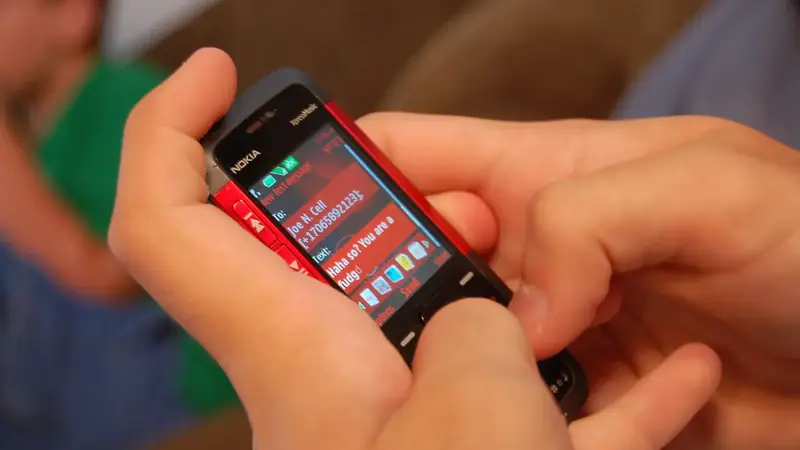
Before a service business sends marketing texts with an automated system, the federal rule asks for "prior express written consent": a signed agreement, electronic signatures included, that names the phone number and says plainly that signing isn't a condition of buying. People can take consent back "using any reasonable method," a reply like STOP counts, and you must honor it within 10 business days. The federal law lets a person sue for $500 per violation, up to three times that if it was willful.
Sources checked November 22, 2026, and listed at the bottom. This is general information, not legal advice. Some states have their own texting laws; ask a lawyer before you start a texting program.
The short answer
- Marketing texts from an automated system need prior express written consent: in writing, signed (electronic counts), with the number, and a clear line that consent isn't a condition of purchase (47 CFR 64.1200(a)(2) and (f)(9)).
- Opting out: any reasonable way counts, and STOP, QUIT, END, REVOKE, OPT OUT, CANCEL or UNSUBSCRIBE always count (64.1200(a)(10)). From November 25, 2026, a sender may name one exclusive way instead, if every text says what it is (FCC order 26-67).
- Timing: honor an opt-out within 10 business days; one confirmation text with no marketing in it is allowed (64.1200(a)(12)).
- The risk: "$500 in damages for each such violation," and a court may triple it for a willful or knowing one (47 U.S.C. 227(b)(3)).
Two kinds of consent
The federal rule, 47 CFR 64.1200, uses two levels, and which one applies depends on what the text is for and how it is sent.
- Prior express consent covers calls and texts made with an automatic dialing system or a prerecorded voice that are not advertising or telemarketing (64.1200(a)(1)).
- Prior express written consent is required when the message is an advertisement or telemarketing and is sent to a cell phone with that kind of system (64.1200(a)(2)). A text about this month's special is marketing.
What counts as an "automatic telephone dialing system" was narrowed by the Supreme Court in Facebook v. Duguid (April 1, 2021): the equipment must have "the capacity to use a random or sequential number generator to either store or produce phone numbers to be called." Whether your texting tool meets that test is a question for a lawyer, and state laws can be stricter. The safe habit for a small business is the same either way: get written consent before you send marketing texts, and keep proof of it.
What written consent has to include
Under 64.1200(f)(9), prior express written consent is "an agreement, in writing, bearing the signature of the person called" that clearly authorizes the seller to send the messages and lists the phone number they may go to. It also needs a clear and conspicuous disclosure that:
- signing authorizes you to send those messages, and
- the person isn't required to sign, or agree to sign, as a condition of buying anything.
The signature can be electronic, "to the extent that such form of signature is recognized as a valid signature under applicable federal law or state contract law." In practice that is usually a checkbox on a web form, next to the exact sentence, that the person ticks themselves.
How to put it on your website form
On a quote or contact form, the consent line is easy to get wrong in ways that undo it. A sound setup:
- Unticked by default. The person ticks it. A box that comes pre-ticked isn't them agreeing.
- Optional. The form still sends without it, which is what "not a condition of purchase" looks like on a page.
- Next to the phone field, with the full sentence beside the box, not behind a link.
- Saved with the lead: the exact words they saw, the date and time, the page, and the number. If someone later says they never agreed, that record is your proof.
That is how our own forms work: the box is unticked and optional, and each tick is saved with the wording version, time and page. What else a good form asks is in what a quote form should ask, and your privacy page should say what you do with numbers: see a privacy page for a local business.
When people say stop
The rule spells out opt-outs in 64.1200(a)(10) to (a)(12):
- A person may revoke consent "using any reasonable method to clearly express a desire not to receive further calls or text messages."
- Replying STOP, QUIT, END, REVOKE, OPT OUT, CANCEL or UNSUBSCRIBE is reasonable per se. Other words count too if a reasonable person would read them as "stop texting me."
- Until November 25, 2026 you may not name one exclusive way to opt out, and a voicemail or an email asking you to stop can count as well (64.1200(a)(11)). From that date, FCC order 26-67 lets a sender name an exclusive method, such as a reply word, "so long as the caller clearly and conspicuously discloses the designated method" in the text. Naming one of the standard words in each text is enough. A sender who names no exclusive method must still honor any reasonable request.
- Also from November 25, 2026: an opt-out sent in reply to an informational text (an appointment reminder, say) may be treated as covering only that kind of message. An opt-out from a marketing text still stops all marketing from that sender.
- If your texts can't take replies, each text must say so and give another way to opt out.
- Honor the request "within a reasonable time not to exceed ten business days." The FCC has asked for comments on shortening that, but the ten-day rule still stands.
- You may send one confirmation text. It must only confirm the opt-out, with nothing promotional in it. Sent within five minutes, it is presumed fine.
Keep a do-not-contact list that every person on your team checks before calling or texting, and never take a name off it because a new form came in. Under 64.1200(d)(3), a do-not-call request is also to be recorded when it is made and honored within ten business days.
Hours and everyday texts
Telephone solicitations to homes may not be made "before the hour of 8 a.m. or after 9 p.m. (local time at the called party's location)" (64.1200(c)(1)). Keeping marketing texts inside that window, in the customer's time zone, is a simple rule to follow. For texts a customer asked for, such as appointment reminders or "we're on the way," the same courtesy keeps complaints down.
Fast replies to a new lead matter, and texting is often the fastest. Our guide on speed to lead for a service business covers how to answer quickly without breaking these rules, and tap-to-call on your website covers the call side.
A five-minute check before you text anyone
- Is this message marketing? If yes, do you have written consent for this number?
- Can you show the exact words the person agreed to, and when?
- Is the number on your do-not-contact list?
- Is it between 8 a.m. and 9 p.m. where they are?
- Will a STOP reply reach a person or a system that acts on it within 10 business days?
Prices for our packages are on our services page, or book a 15-minute call.
Questions people ask
Do I need written consent to text customers?
For marketing texts sent with an automatic dialing system to a cell phone, the federal rule requires prior express written consent. Other texts need prior express consent. State laws can add more, so ask a lawyer before you start.
Does a checkbox on a web form count as a signature?
The rule accepts an electronic or digital signature where federal law or state contract law recognizes it. A box the person ticks themselves, next to the full consent sentence, is the usual way.
How fast do I have to stop texting after someone says STOP?
Within a reasonable time that may not exceed ten business days. You may send one confirmation text with no marketing in it.
Can consent be required to get a quote?
No. The disclosure must say that agreeing isn't a condition of buying anything, so the form should still work without the box ticked.
What is the penalty for texting without consent?
Federal law lets a person recover actual loss or $500 per violation, whichever is greater, and a court may increase it up to three times for a willful or knowing violation.
Want your forms and lead handling checked? Run the free Instant Website Score, or ask us to look.
Sources
- 47 CFR 64.1200: Delivery restrictions (Cornell LII)
- 47 U.S.C. 227: Restrictions on use of telephone equipment (Cornell LII)
- Facebook, Inc. v. Duguid, 592 U.S. (2021) (Cornell LII)
- FCC 26-67: Report and Order on revoking consent (released October 1, 2026; read November 22, 2026)
Ask for a free audit More guides
Or call (346) 472-0629.
Check your own business
- Free Growth Audit: type your web address and get a score out of 100 in about 30 seconds, with what to fix first. No sign-up.
- Website cost calculator: See what a site like yours usually costs, with the assumptions shown.
- Website design for contractors: How we build sites for home service trades, and what each one includes.
Want our guides to show up first when you search Google? Pick us as a preferred source.
Add Digital Space Farmers as a preferred source on Google Websites for multi-location service businesses
 Texas mover website rules: TxDMV, USDOT and help line
 Texas locksmith advertising rules: license, address, cards
See where your site stands.
Free, about 30 seconds, no email needed.
Get your Instant Website ScoreOr ask for the full audit, done by a person.